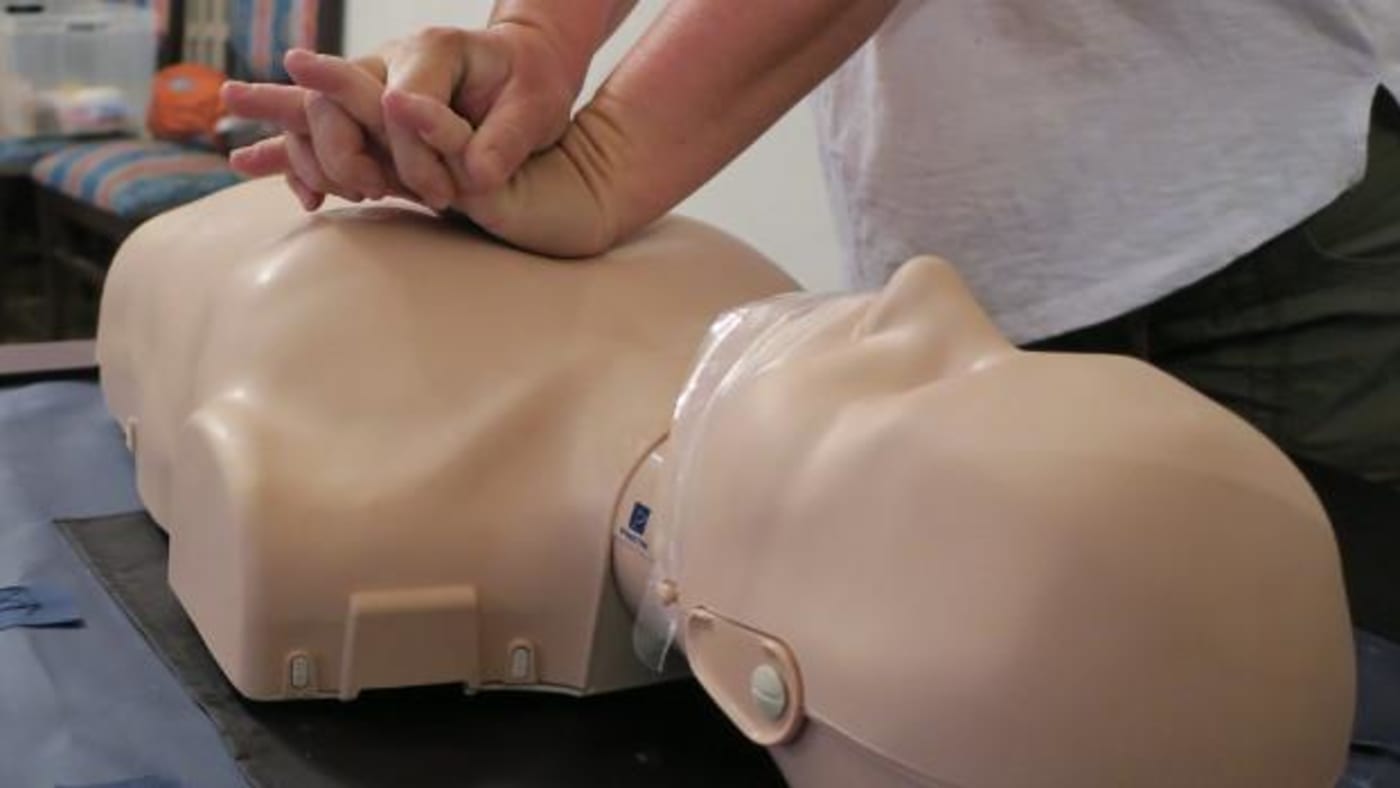
Learn the skills. Build your confidence. Be prepared to save a life.
Would you know what to do if someone suddenly collapsed, stopped breathing or suffered a cardiac arrest?
In a life-threatening emergency, every second counts. Having the knowledge, practical skills and confidence to act quickly can make a significant difference to someone's chances of survival.
Our Basic Life Support (BLS), Cardiopulmonary Resuscitation (CPR) and Automated External Defibrillator (AED) Course is a comprehensive, practical 6-hour training programme designed to equip participants with the essential skills needed to recognise and respond to life-threatening medical emergencies.
Delivered here in Andalucía, Spain, our training is adapted to the needs of people living, working and spending time in the region. Whether you are responsible for first aid in the workplace, run a business, work with the public or simply want to be prepared should an emergency occur, this course provides valuable, potentially lifesaving knowledge.
Our approach focuses on realistic scenarios, practical experience and building the confidence to take action when it matters most.
Who Is This Course Suitable For?
This course is suitable for anyone wishing to develop essential lifesaving skills, regardless of previous first aid experience.
It is particularly beneficial for:
- Workplace First Aiders: Employees and designated first aiders responsible for responding to medical emergencies, particularly in workplaces equipped with an AED.
- Hospitality & Tourism Staff: Hotel employees, restaurant staff, holiday accommodation providers and those working with visitors throughout Andalucía.
- Outdoor Activity Providers: Walking guides, cycling instructors, outdoor educators, adventure leaders and anyone responsible for groups in outdoor environments.
- Sports & Fitness Professionals: Personal trainers, gym instructors, sports coaches and leisure centre staff.
- Teachers & Childcare Professionals: Individuals working with children and young people who wish to develop their emergency response skills.
- Community Groups & Volunteers: Individuals involved in community organisations, clubs, charities and public events.
- Parents, Families & Individuals: Anyone wanting to learn how to respond confidently if a family member, friend or member of the public experiences a medical emergency.
No previous first aid qualifications or experience are required.
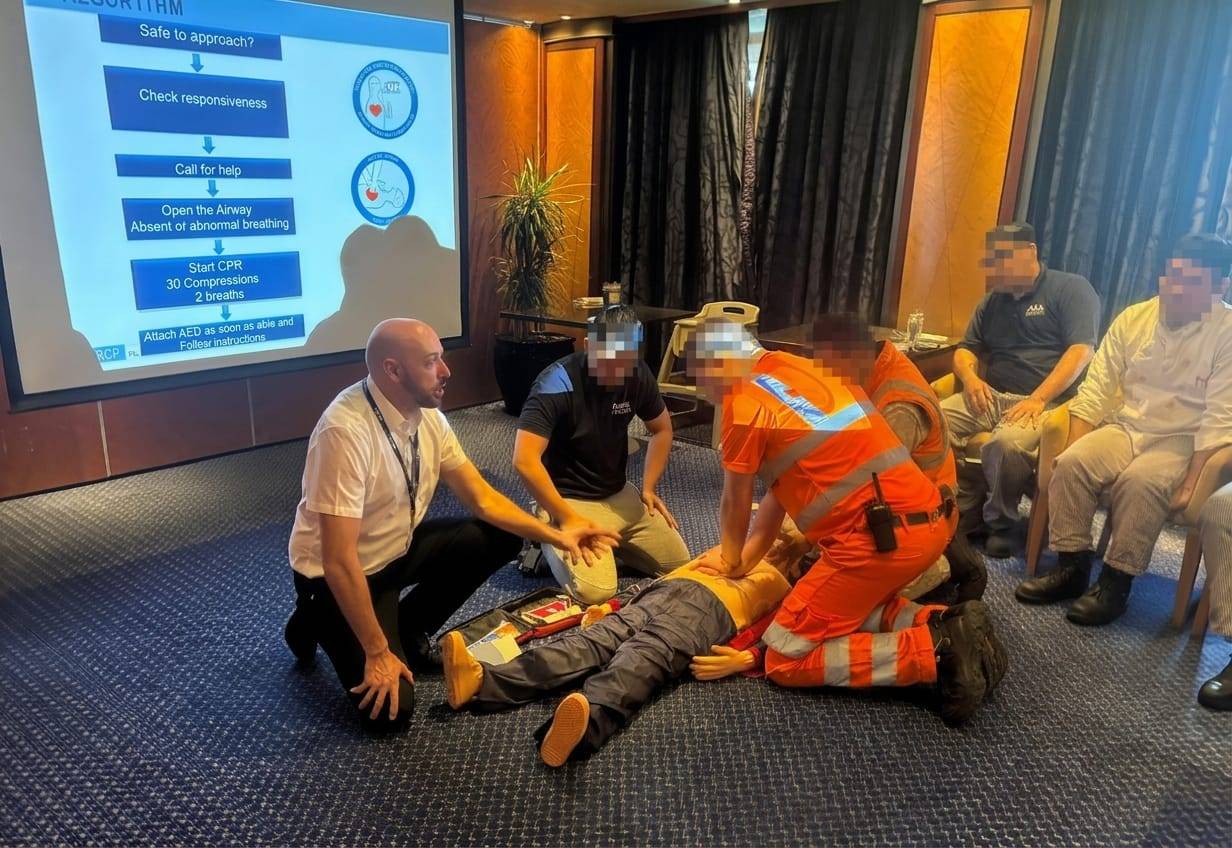
What Will You Learn?
Throughout this 6-hour course, participants will develop the practical skills and understanding needed to recognise, assess and manage a range of potentially life-threatening emergencies involving adults, children and infants.
1. Roles & Responsibilities of a First Aider
Understand the important role of a first aider and how to respond safely, calmly and effectively during an emergency.
Topics include:
- Understanding the responsibilities and limitations of a first aider.
- Recognising potential hazards and ensuring personal safety.
- Prioritising actions during a medical emergency.
- Communicating effectively with casualties, bystanders and emergency services.
- Understanding consent and the importance of appropriate casualty care.
2. Assessing an Emergency Situation
Learn how to assess an incident quickly and systematically, identifying immediate threats to life and deciding what action is required.
Topics include:
- Conducting an initial scene safety assessment.
- Checking a casualty's level of responsiveness.
- Assessing the airway and breathing.
- Recognising abnormal breathing and signs of cardiac arrest.
- Calling the Spanish emergency services on 112.
- Providing clear and accurate information to emergency responders.
3. Managing an Unresponsive Casualty
Learn how to provide immediate assistance to someone who has become unconscious or unresponsive.
Topics include:
- Identifying whether a casualty is responsive.
- Opening and maintaining an airway.
- Checking for normal breathing.
- Placing an unconscious but normally breathing casualty into the recovery position when appropriate.
- Monitoring the casualty while awaiting emergency assistance.
- Recognising when immediate CPR is required.
4. Cardiopulmonary Resuscitation (CPR)
CPR is one of the most important emergency lifesaving skills. Participants learn how to perform effective CPR through practical, hands-on training using resuscitation manikins.
Training covers:
- Understanding what happens during cardiac arrest.
- Recognising when CPR is necessary.
- Performing effective chest compressions.
- Understanding compression depth, rate and technique.
- Delivering rescue breaths where trained and willing.
- Performing CPR on adults, children and infants.
- Understanding the differences between adult, child and infant resuscitation.
- Maintaining CPR until professional assistance arrives or the casualty shows signs of life.
5. Automated External Defibrillator (AED) Training
An AED is a portable medical device that analyses the heart's rhythm and, when necessary, delivers an electrical shock to help restore an effective rhythm.
Early defibrillation, alongside effective CPR, can significantly improve survival chances following certain types of cardiac arrest.
Participants will learn:
- What an AED is and how it works.
- When and why an AED should be used.
- How to locate and access a defibrillator.
- Safely switching on and operating an AED.
- Correct positioning of electrode pads.
- Following the device's voice and visual instructions.
- Safety precautions when delivering a shock.
- Using an AED on adults and children, including paediatric considerations.
- Continuing CPR alongside AED use.
- Responding confidently to a cardiac arrest scenario using CPR and an AED together.
Practical AED training forms an important part of the course, allowing participants to become familiar with the equipment and practise its use in realistic emergency scenarios.
6. Heart Attacks & Angina
Recognising the warning signs of a heart-related medical emergency can help ensure that a casualty receives urgent medical assistance.
Participants will learn:
- The difference between a heart attack and cardiac arrest.
- Common signs and symptoms of a heart attack.
- Recognising angina and understanding how it differs from a heart attack.
- Appropriate first aid actions for someone experiencing chest pain.
- When to contact emergency services.
- Supporting and monitoring the casualty while awaiting medical assistance.
7. Recognising a Stroke
A stroke is a serious medical emergency requiring immediate professional treatment.
Participants will learn:
- What happens during a stroke.
- Recognising common signs and symptoms.
- Using the FAST assessment to identify possible stroke symptoms.
- Understanding the importance of rapid medical intervention.
- Supporting a casualty while waiting for emergency services.
8. Choking Emergencies
A blocked airway can quickly become life-threatening. Participants will learn how to recognise and respond to choking incidents involving adults, children and infants.
Topics include:
- Recognising mild and severe airway obstruction.
- Encouraging effective coughing where appropriate.
- Delivering appropriate back blows and abdominal thrusts for adults and children.
- Understanding the different techniques required for infants.
- Managing a casualty who becomes unresponsive.
- Knowing when to begin CPR and seek emergency assistance.
Practical, Hands-On Training
We believe first aid is best learned through practical experience rather than simply sitting in a classroom.
Throughout the course, participants will have opportunities to practise essential lifesaving techniques using training equipment and realistic emergency scenarios.
Our training is designed to be supportive, approachable and engaging, helping participants build the confidence to apply their knowledge in a real emergency.
The course includes:
- Practical CPR training on adult, child and infant manikins.
- Hands-on AED training using demonstration devices.
- Airway management and recovery position practice.
- Realistic emergency scenarios.
- Group discussions and opportunities to ask questions.
- Instructor feedback and guidance throughout the course.
By the end of the training, participants should feel better prepared to recognise a medical emergency, make informed decisions and provide immediate assistance while professional help is on the way.
Certification & Course Recognition
- Course duration: 6 hours
- Certification: Basic Life Support, CPR & AED
- Certification validity: 3 years
- Certification available: Plan Nacional de RCP certification, subject to the applicable assessment and certification requirements
The course is designed to support workplace first aid arrangements in Spain, particularly where staff may be expected to respond to cardiac emergencies or use an automated external defibrillator.
Employers should confirm that the training meets the requirements of their workplace risk assessment, applicable Spanish legislation and any specific regional or industry regulations.
Participants who successfully complete the required training and assessment will receive the relevant course certification.
First Aid Training Adapted for Life in Andalucía
Living and working in Andalucía offers a fantastic outdoor lifestyle, but it can also present challenges when medical emergencies occur.
Whether you are working in a busy hotel, managing a rural property, guiding visitors through the mountains, organising sporting activities or spending time with family in a remote location, knowing how to respond to a medical emergency is invaluable.
Our courses are delivered with these environments in mind, using practical examples and realistic situations relevant to everyday life in southern Spain.
We aim to make first aid training accessible, informative and enjoyable, ensuring that participants leave with more than just a certificate. They leave with practical skills, greater awareness and the confidence to help someone in need.
Course Information at a Glance
| Course details | Information |
|---|---|
| Course | Basic Life Support, CPR & AED |
| Duration | 6 hours |
| Location | Andalucía, Spain |
| Experience required | None |
| Training style | Theory, practical skills and emergency scenarios |
| Assessment | Practical assessment and knowledge checks as required |
| Certification | Plan Nacional de RCP certification available |
| Certificate validity | 3 years |
| Suitable for | Individuals, businesses, workplaces and groups |
Book Your Basic Life Support, CPR & AED Training
You don't need to be a medical professional to make a lifesaving difference.
Learning CPR and how to use a defibrillator could help you save the life of a colleague, friend, family member or complete stranger.
Whether you're looking to gain essential first aid skills for yourself or arrange training for your employees or organisation, our practical courses provide the knowledge and confidence to respond when it matters most.
Be prepared. Act with confidence. Learn skills that could save a life.
Contact us to discuss course availability, group bookings and training opportunities throughout Andalucía.